Tools for understanding a world in structural transition.


Most people encounter change as a series of headlines. My work treats it as a system.
Across my research, writing, and advisory work, I focus on how demographic change, climate risk, technological acceleration, and geography interact—and how those interactions reshape prosperity over time. The goal isn’t prediction. It’s orientation: helping leaders see what’s changing early enough to act with intention.
I start from a simple premise: big shifts rarely arrive one at a time.
Population decline changes labor markets. Labor shortages accelerate automation. Automation reshapes geography. Climate risk narrows where growth is viable. Each force compounds the others.
My frameworks are designed to make those interactions visible—so leaders can stress-test assumptions, surface tradeoffs, and design responses that hold up over time.
The Geography of Prosperity Index
A systems-based way to assess whether places are built to last.
Economic growth alone doesn’t tell you whether a place—or an organization tied to it—is resilient. The Geography of Prosperity Index* looks underneath the headline numbers to assess long-term capacity.
The Index evaluates places across five equally weighted systems:
Population Renewal – whether a place can sustain its people base through births, migration, and retention
Climate and Extreme Weather Resilience – exposure, adaptation, and institutional readiness for climate risk
Automation Readiness – the ability to absorb technological change without hollowing out opportunity
Social Cohesion – trust, inclusion, and civic capacity to manage disruption
Governance & Foresight – whether institutions plan, coordinate, and adapt rather than react
Together, these dimensions explain why some places adapt to disruption—and others stall or fracture under it.
How it’s used:
Stress-testing growth and investment assumptions
Informing place-based strategy and policy design
Anchoring long-term planning conversations in evidence, not anecdotes.
(The Geography of Prosperity Index is a core framework in my forthcoming book, published by MIT Press.)

Core research themes
Demographic change
Declining birth rates, population aging, and migration are not background trends—they are first-order forces shaping labor supply, consumer demand, and fiscal sustainability. My work focuses on what happens after societies stop growing by default.
Longevity and the life course
Longer lives are changing how people work, care, consume, and belong. I explore how institutions built around a short, linear life course need to adapt to multistage lives that stretch across decades.
Place, geography, and risk
Where people live—and can afford to live—is becoming strategic again. Climate exposure, housing, insurance, and infrastructure are reshaping maps of opportunity faster than many leaders realize.
Systems under strain
Work, care, education, housing, and governance were designed for a population that no longer exists. I study where these systems are misaligned—and what redesign looks like when patching no longer works.

From research to decision making
Frameworks only matter if they change how decisions get made.
I use this work to help leaders:
Identify hidden demographic and geographic risk
Ask better strategic questions earlier
Avoid solutions optimized for a past that won’t return
Design responses that balance realism with opportunity
This research informs my speaking, advisory work, and writing—but it’s also designed to stand on its own as a way of thinking about the future.
Books and long-arc work
My research culminates in longer-form projects that connect data, history, and lived experience.
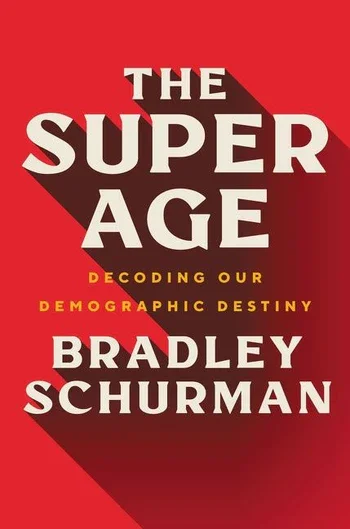
The Super Age (Harper Collins, 2022) explores longevity, aging populations, and what they mean for markets and society.
The Geography of Prosperity (MIT Press, 2027) introduces The Geography of Prosperity Index and argues for a new way of understanding growth, resilience, and place in an era of demographic and climate stress.
These projects reflect the same goal as the rest of my work: to make complexity legible—and usable.
Work with these frameworks
If you’re looking to apply this thinking to strategy, planning, or leadership conversations, these frameworks can be used in several ways:
Executive briefings and board sessions
Scenario planning and stress-testing
Advisory engagements tailored to your organization or region
Reach out today to learn more.